
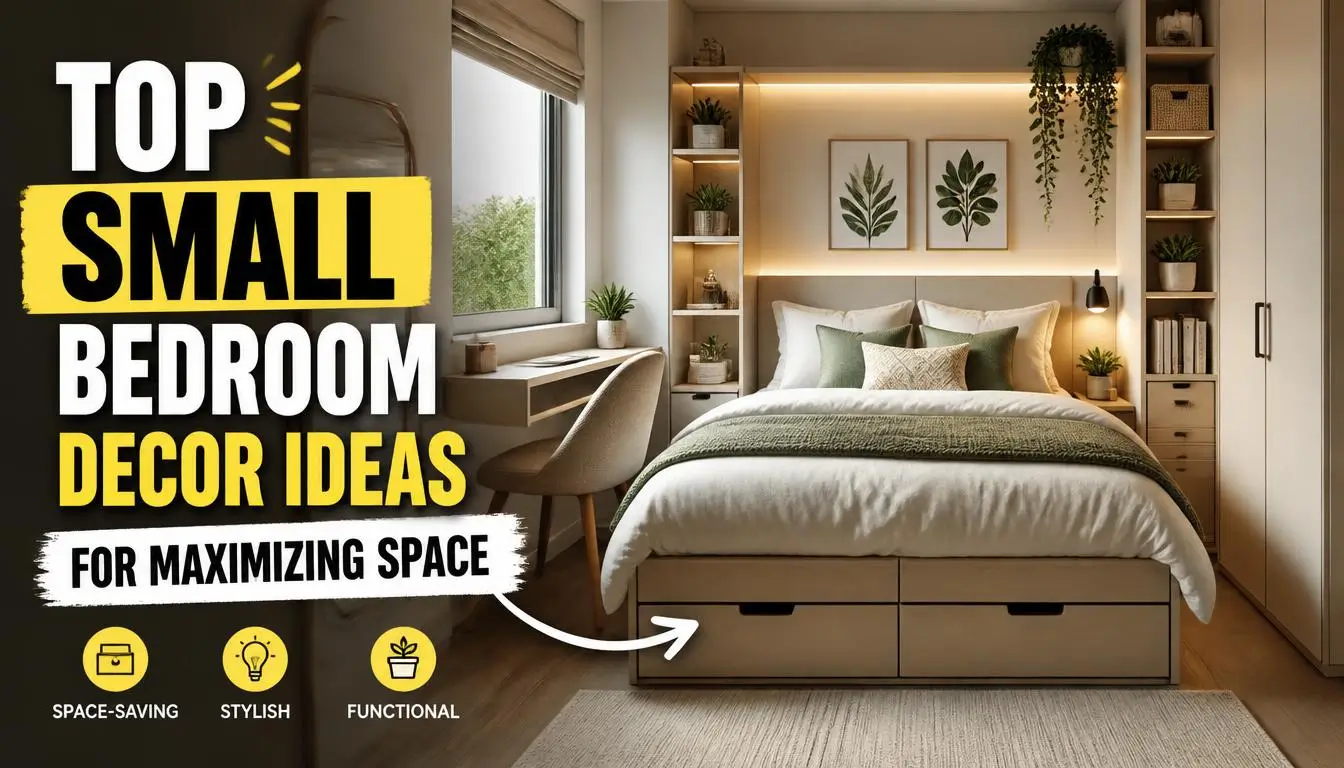
The top small bedroom decor ideas for maximizing space are not about making a tiny room look bigger through visual tricks that stop working the moment you actually live in the space. They are about making every square foot function better, feel calmer, and hold more without looking like a storage unit with a bed in it. I have lived in small bedrooms more often than large ones, and the rooms that worked were never the ones with the most clever hacks. They were the ones where the layout made sense, the storage pulled its weight, and nothing was there without earning its place.
Why Small Bedrooms Feel Smaller Than They Are
Most small bedrooms feel smaller than their actual square footage because of decisions that seemed reasonable in isolation but compound into a space that feels cramped, cluttered, and visually exhausting.
Furniture that is too large for the room is the most common culprit. A bed with a bulky frame and thick headboard that leaves eighteen inches of walking space on each side is not a small room problem. It is a furniture proportion problem. Dark walls with no reflective surfaces absorb light in a way that collapses the visual boundaries of a room inward. Clutter at eye level overwhelms the brain’s spatial processing faster than clutter at floor level, which is why a messy desk surface makes a small bedroom feel smaller than an equally messy closet floor. Understanding these mechanisms produces more targeted solutions than a generic list of space-saving tips ever does.
1. Choose the Right Bed Frame for the Space
The bed is the largest single object in a bedroom, and its frame determines how the room breathes around it more than any other furniture decision. A bed frame that is too heavy, too tall, or too wide for the room’s proportions makes everything else in the room feel squeezed regardless of how thoughtfully the rest of the space is organized.
Platform beds with low profiles are the top small bedroom decor choice for maximizing the vertical breathing room of the room because they sit closer to the floor, leaving more wall visible above the mattress and making the ceiling feel higher than it does with a taller frame. Storage beds with drawers underneath eliminate the need for a separate dresser entirely in very small rooms, which can free up an entire wall for other purposes or simply open the room’s floor plan significantly. Floating bed frames mounted to the wall rather than resting on legs make cleaning easier and create the visual impression of more floor space by removing the visual break that legs and a frame base create between the floor and the mattress.
Size discipline matters enormously: a queen bed in a room that comfortably fits a full is not a small problem. It is the foundational constraint that every subsequent decision fights against. If a queen fits but leaves under two feet of walking space on the sides, consider whether the full’s sleeping sacrifice produces a room that functions so much better that the trade is worthwhile. A room where you can move comfortably around the bed, open drawers fully, and reach the closet without turning sideways functions better and feels larger than one where the maximum bed size won the furniture debate.
2. Use Vertical Space as a Primary Storage Strategy
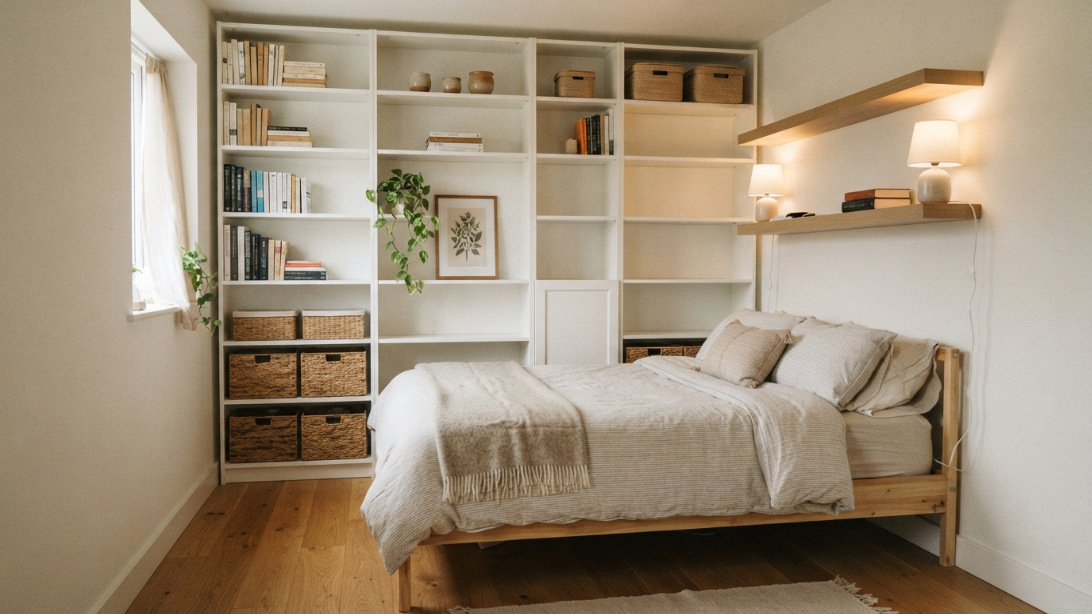
In a small bedroom, the walls between shoulder height and ceiling represent the most underused storage real estate in the room. Most small bedroom storage instinctively targets floor-level and flat-surface solutions that consume the very space that makes a small room livable, while the vertical space above eye level sits empty and unused.
Floor-to-ceiling shelving on one full wall converts what would be wasted space into storage, display, and personality simultaneously. The IKEA BILLY bookcase system at $50 to $100 per unit with extensions that reach ceiling height is the most cost-effective floor-to-ceiling shelving solution available for small bedrooms, and the modular nature of the system allows configuration to whatever the specific wall dimensions require. Styling the upper shelves with books and objects rather than purely functional storage keeps the shelving from looking like warehouse racking while maintaining its space efficiency.
Floating shelves above the bed in the space between the headboard and the ceiling provide display and storage space that a bedside table would require floor area to deliver. Two or three floating shelves above each side of the bed can hold books, a small lamp, a phone charger, and personal objects without consuming the bedside floor area that a nightstand requires. Over-door organizers on the back of closet doors and bedroom doors add storage to surfaces that are literally already there and already in use.
3. Top Small Bedroom Decor Ideas for Maximizing Space Through Smart Furniture Choices
Furniture selection in a small bedroom requires a more deliberate evaluation of each piece’s value relative to the floor space it claims than any other room in a home, because the floor space a piece of furniture occupies in a small bedroom is never neutral. It is always traded against something else.
Multifunctional Furniture That Earns Its Place
Every piece of furniture in a small bedroom should ideally perform more than one function, because the luxury of single-purpose furniture is a large-room privilege that small rooms cannot afford without consequence.
A storage ottoman at the foot of the bed provides seating, a surface for setting things down, and internal storage for extra blankets, off-season clothing, or anything else that needs a home. A desk that folds against the wall when not in use provides a full workspace when needed and disappears entirely when the room needs to function purely as a bedroom. A nightstand with drawers provides the surface function of a standard nightstand alongside the storage function of a small dresser, potentially eliminating the need for a separate dresser in very small rooms.
Nightstands That Do Not Consume Floor Space
Standard nightstands with four legs and a drawer do their job but claim floor space that small bedrooms often cannot spare without consequence to the walkable area around the bed. Several alternatives provide equivalent function without the floor footprint.
Wall-mounted floating nightstands attach to the wall at whatever height suits the mattress and leave the floor completely clear beneath them. They typically cost $30 to $80 each and require only a stud finder and basic wall anchoring hardware to install. Nightstand alternatives including a small floating shelf, a wall-mounted lamp with a built-in shelf, or a simple bedside caddy that attaches to the bed frame eliminate the floor footprint entirely while providing the surface and storage that bedside life requires.
4. Use Mirrors Strategically Rather Than Decoratively
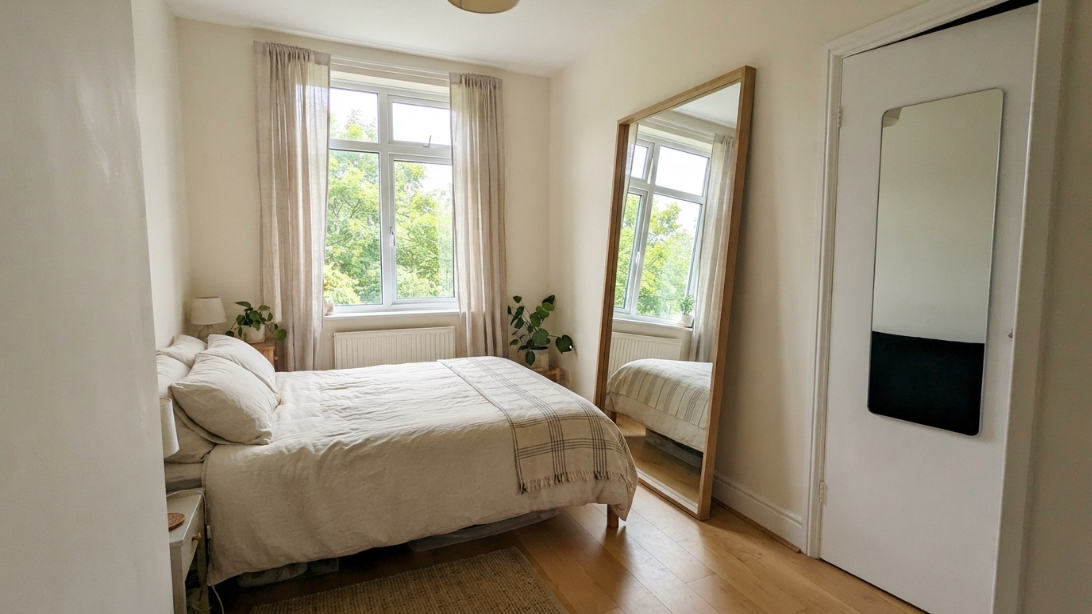
Mirrors in small bedrooms are frequently used decoratively, which means they are placed where they look good rather than where they perform the specific spatial function that makes mirrors valuable in small rooms. Understanding the spatial function of mirrors produces placements that do both.
A large mirror placed opposite or adjacent to the room’s primary window reflects natural light into the darker areas of the room and creates a visual depth that effectively expands the perceived boundaries of the space. The mirror reads as a continuation of the room rather than a wall surface, which the brain processes as additional space even when intellectually aware of the illusion. A full-length mirror on the inside of the closet door or on a wall that previously held nothing provides the practical dressing function while adding reflected light and depth at zero additional floor cost.
Mirror placement mistakes in small bedrooms include hanging mirrors too high, where they reflect the ceiling rather than the room, and using collections of small decorative mirrors that provide neither the spatial depth of a large mirror nor the practical function of a full-length one. One large mirror placed thoughtfully outperforms four small mirrors arranged decoratively every time in terms of spatial impact.
5. Control Clutter Through Systems Rather Than Willpower
Clutter in a small bedroom is not a character flaw or a cleaning problem. It is a systems problem, specifically the absence of designated homes for the categories of items that accumulate in bedrooms regardless of the inhabitant’s intentions.
Identifying the clutter categories specific to your bedroom is the first step: charging cables and electronics, books and reading materials, clothing in transitional states between clean and laundry, accessories and jewelry, skincare and personal care products. Each category needs a designated home that is both convenient enough to use consistently and contained enough to prevent spreading. A charging station on the nightstand keeps cables corralled. A book crate or small shelf beside the bed provides a home for the reading pile that otherwise colonizes the nightstand surface. A valet hook or small wall-mounted rod provides a home for transitional clothing that would otherwise accumulate on the chair, the floor, or the bed corner.
The one-in-one-out rule applied consistently to a small bedroom prevents the gradual accumulation that eventually makes even well-organized small bedrooms feel overwhelmed. Every new object introduced to the room displaces an existing one rather than adding to the total. Applied to clothing, books, accessories, and decorative objects equally, this rule maintains the spaciousness that good organization creates without requiring periodic dramatic decluttering sessions.
6. Choose a Light and Cohesive Color Palette
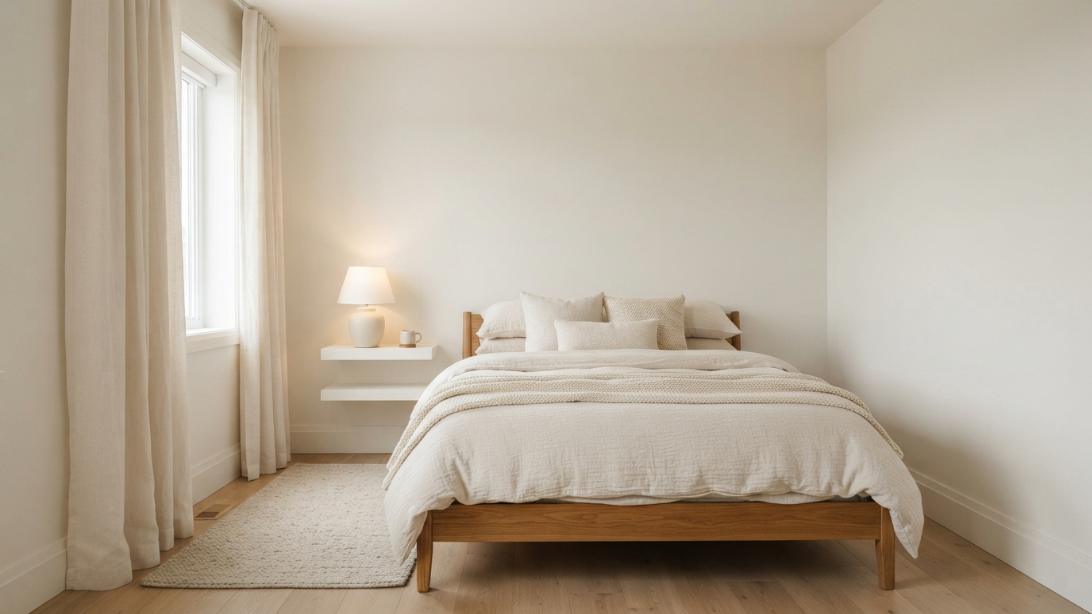
Color in a small bedroom affects perceived size through two distinct mechanisms: value, the lightness or darkness of a color, and temperature, whether the color reads as warm or cool. Light values reflect more light and make surfaces recede visually, which makes walls feel further away. Cool tones recede slightly more than warm tones, though the difference is subtle enough that a light warm tone outperforms a medium cool tone in terms of spatial effect.
Painting walls, ceiling, and trim the same light color is the specific painting approach that most dramatically expands a small bedroom’s perceived size, because it eliminates the visual interruptions that different colored surfaces create and allows the eye to travel continuously around the room without stopping at a contrast boundary. A room where the walls are soft white, the ceiling is the same soft white, and the trim is the same soft white reads as significantly larger than the same room with a white ceiling, light grey walls, and bright white trim, despite having identical actual dimensions.
Keeping bedding, curtains, and large upholstered surfaces within the same color family as the walls reduces the number of distinct color zones the eye processes and makes the room feel calmer and more expansive. This is not the same as making the room monochromatic to the point of boredom: texture variation within a cohesive color palette provides visual interest without the spatial fragmentation that strong color contrast creates.
7. Manage Light to Make the Room Feel Larger
Natural light is the single most powerful spatial expander in a small bedroom, and managing it well means both maximizing its presence and distributing it as broadly as possible through the space.
Window treatments that maximize light when privacy allows are the first consideration: sheer curtains rather than blackout panels during daytime hours, curtain hardware mounted high and wide to make the window appear larger than it is, and the complete absence of treatments that block the view to the outside, which makes the room feel more connected to the space beyond its walls. Blackout function provided separately from the primary curtain layer, through a blackout shade or liner behind a sheer panel, allows maximum daytime light while maintaining the sleep-quality darkness that bedrooms require.
Strategic lamp placement distributes artificial light into the corners and darker areas of the room that overhead light does not reach effectively. A small bedroom with one overhead light and no supplementary lamps has bright center and dark corners that make the room feel smaller than its actual dimensions because the dark corners read as undefined space rather than usable room. Adding bedside lamps, a corner floor lamp, or even LED strip lights behind furniture or along shelving edges distributes light into those corners and makes the room feel more completely and generously sized.
8. Apply Minimalism to Display and Decoration
Decoration in a small bedroom has a cost that it does not have in larger spaces: every decorative object contributes to the visual complexity that the brain processes as density, and density in a small space translates directly to a perception of smallness. This does not mean small bedrooms should be bare or personality-free. It means decoration should be curated rather than accumulated.
The three-surface rule is a useful framework for small bedroom decoration: choose three surfaces for styled display and treat every other surface as functional rather than decorative. The nightstand top, the top of the dresser, and one floating shelf might be the three styled surfaces. Everything else remains clear or holds only functional items. Within each styled surface, limit objects to three to five items in related tones and materials that look considered rather than collected.
Gallery walls in small bedrooms work best when they are treated as a single composed element rather than a collection of individual pieces: one large piece or a tightly grouped collection of pieces that together occupy a defined rectangular area reads as one element rather than many, which reduces visual complexity while still providing the personality and warmth that a bare wall cannot.
9. Maximize Closet Space Before Adding Bedroom Storage
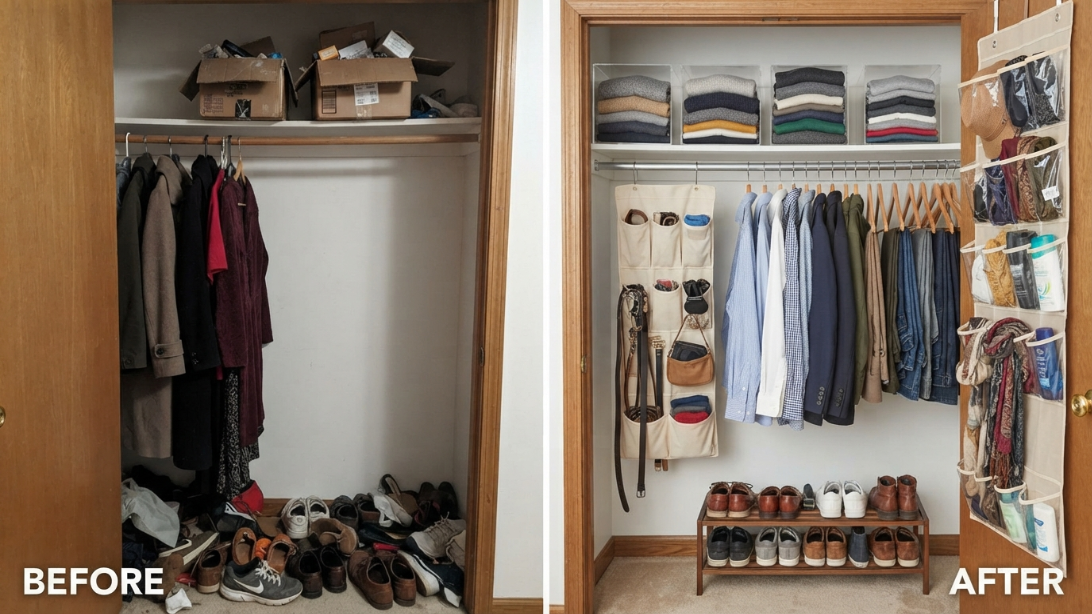
Most small bedroom storage problems are partially closet organization problems that have overflowed into the bedroom because the closet has not been organized to its functional capacity. Before adding a dresser, a storage ottoman, or additional furniture to solve a storage problem, maximizing the closet’s capacity almost always produces more storage than the furniture addition would while keeping the bedroom floor plan cleaner.
A double hanging rod in a closet section where only long garments would otherwise hang immediately doubles the hanging capacity of that section for shirts, jackets, and folded trousers. Shelf dividers prevent folded stacks from toppling and allow more items per shelf by providing lateral containment. Over-the-rod organizers add a hanging layer of storage to the rod itself for accessories, small bags, and items that would otherwise need a drawer or shelf. The IKEA PAX wardrobe system at $200 to $600 fully configured replaces an entire dresser and potentially additional shelving with a closet system that keeps everything behind doors and completely out of the bedroom’s visual field.
10. Use Rugs to Define and Anchor the Space
A rug in a small bedroom performs the specific function of defining the sleeping area as a distinct zone within the room, which paradoxically makes the room feel larger by creating a sense of organized spatial division rather than undivided small space.
Rug size in small bedrooms follows the same principle as in living rooms: larger than you think, with the front legs of any bedside furniture and ideally the front legs of the bed itself sitting on the rug. A rug that is too small floats in the room without anchoring anything and makes the furniture arrangement look tentative. Light-colored rugs with low pile reflect light rather than absorbing it and feel visually lighter than dark, high-pile alternatives, which suits small bedrooms where every design decision should be evaluated against its light and space impact.
Placement specifically matters in a bedroom context: a rug that extends past the foot of the bed as well as the sides creates a visual border that makes the room’s floor plan feel intentional and the bed feel properly placed rather than dropped into the space without consideration for what surrounds it.
FAQs
What are the top small bedroom decor ideas for maximizing space when the room has no closet?
A wardrobe system like the IKEA PAX or a clothing rack with curtain panels hides behind it provide closet function without built-in infrastructure. Over-door organizers on the bedroom door, under-bed storage drawers, and a storage ottoman at the foot of the bed collectively provide the clothing and accessory storage that a closet would handle. Keep clothing visible storage to one designated area rather than distributing it across multiple surfaces.
What bed size actually works best in a very small bedroom?
In rooms under 10 by 10 feet, a full or double mattress usually provides the best balance between sleeping comfort and functional floor space around the bed. In rooms between 10 by 10 and 10 by 12 feet, a queen fits but requires careful furniture editing everywhere else. A king in any room under 12 by 14 feet almost always produces a space that functions poorly regardless of how well everything else is organized.
Do dark colors always make small bedrooms feel smaller?
Not always, but usually. A very dark, deeply saturated wall color in a small bedroom with limited natural light will almost always feel smaller than a lighter alternative. However, a dark color used only on one wall behind the bed as an accent can add depth and drama without collapsing the room’s perceived size, particularly when the remaining three walls stay light and the ceiling is painted white or very light.
Is wallpaper a good idea in a small bedroom?
A wallpaper used on one accent wall behind the bed can add significant personality and visual depth without overwhelming the room. A small-scale pattern or a textured wallpaper that reads as mostly neutral from a distance works better than a large-scale bold pattern that fragments the wall visually and makes the room feel busier. Full-room wallpaper in a small bedroom requires a very restrained pattern and light colorway to avoid making the room feel enclosed.
How do I make a small shared bedroom work for two people?
Define each person’s zone clearly using rugs, lighting, or furniture arrangement rather than trying to create one unified setup that serves both. Each person having a dedicated nightstand, lamp, and storage area reduces the organizational friction that shared small spaces create. Vertical storage claimed by each person individually on their side of the room doubles the effective storage without requiring additional floor space that a shared room cannot easily spare.
Conclusion
A small bedroom that works is not about making it look larger than it is. It is about making it function better than it currently does, feel calmer than it has been, and hold everything it needs to hold without announcing the effort it took to get there. Start with the bed, then the storage, then the light, and let each decision inform the next. Which change are you making first?