
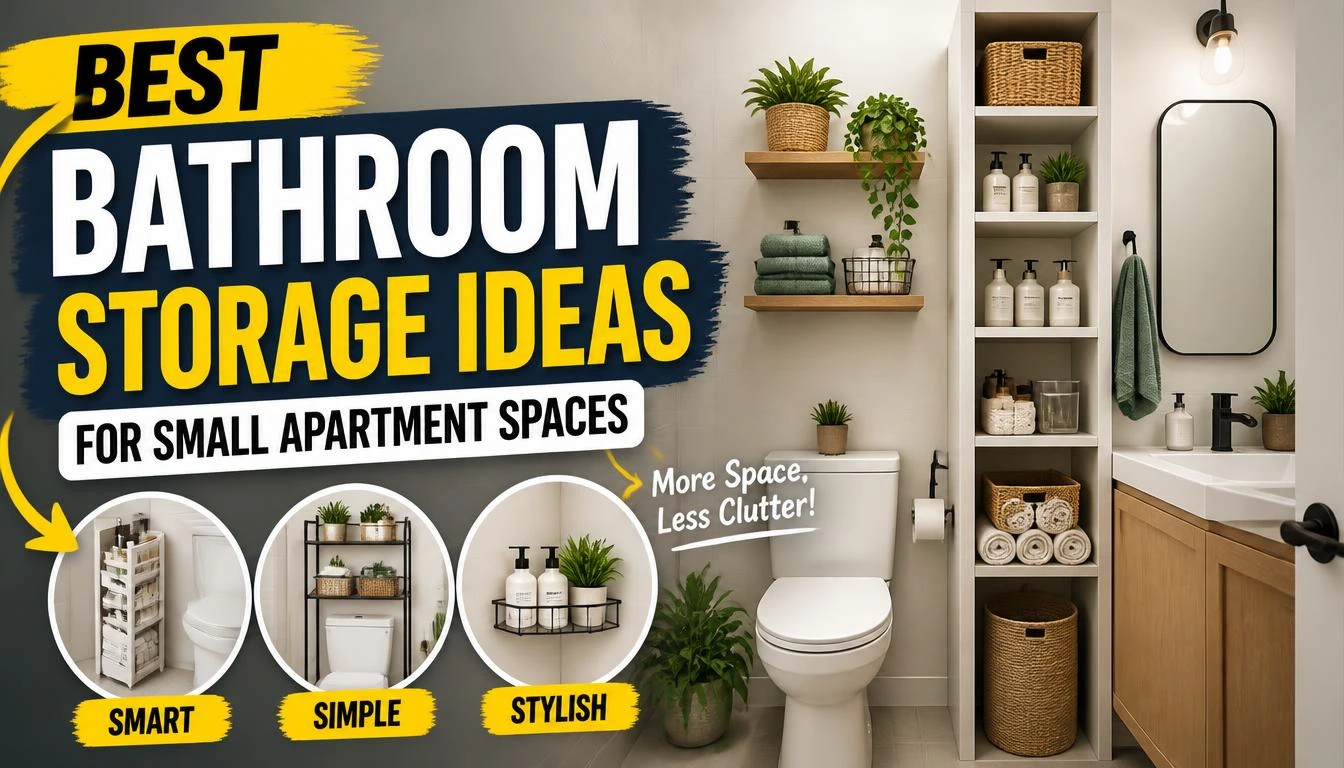
The best bathroom storage ideas for small apartment spaces solve a problem that feels uniquely stubborn compared to storage challenges in other rooms. A small bedroom can use under-bed storage. A small kitchen can use vertical shelving and cabinet organizers. A small bathroom has a toilet, a sink, a shower or tub, and approximately three square feet of remaining floor space in which to store everything a human being needs for their daily personal hygiene routine. The math is difficult from the start.
What makes bathroom storage in small apartments genuinely solvable is that most small bathrooms have significantly more usable space than they appear to have at first glance. The space above the toilet is almost always empty. The back of the door is almost always unused. The inside of cabinet doors is almost always wasted. The wall space between fixtures is almost always bare. The area under the sink is almost always chaos rather than organized storage. Every one of these spaces represents real storage capacity that most apartment bathrooms never use intentionally.
1. Install an Over-Toilet Etagere or Shelf Unit
The space above the toilet is the most consistently wasted real estate in any small bathroom. An over-toilet etagere, a freestanding shelf unit designed to fit over a standard toilet tank, converts that empty vertical space into three to four shelves of storage without touching a wall or requiring any installation.
Over-toilet etageres come in a wide range of styles from matte black metal frames to warm bamboo to white painted wood, which means there is almost certainly an option that fits the existing bathroom aesthetic. The shelves hold towels, toilet paper, small plants, candles, baskets of toiletries, and any other items that need a home. They are freestanding, which makes them completely renter-friendly, and they move with you when you leave. Vertical space above the toilet is free storage that small apartment bathrooms almost never use.
2. Use the Inside of Cabinet Doors for Additional Storage
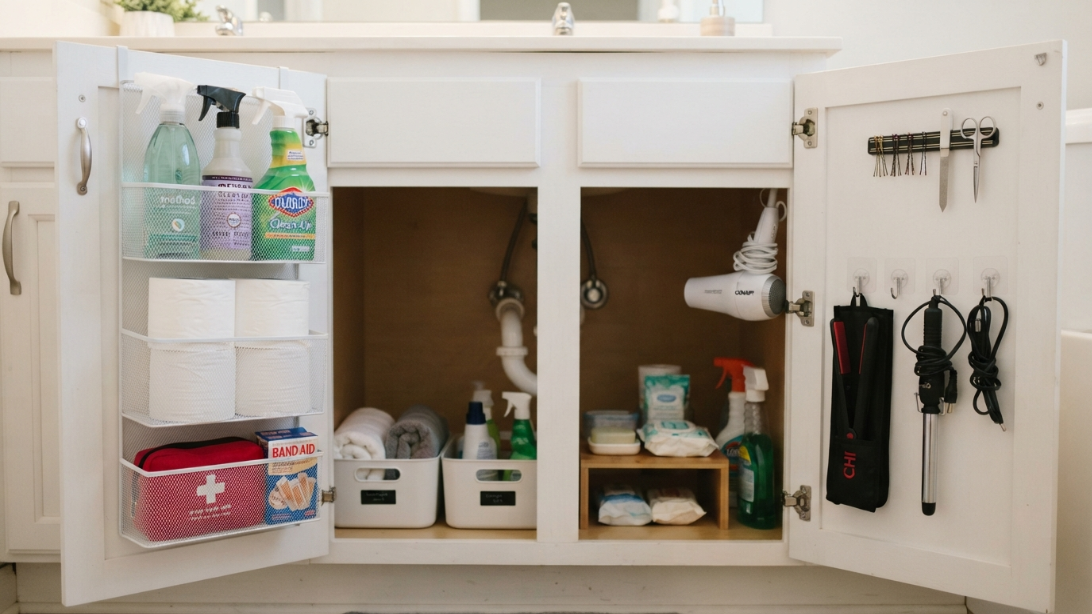
The inside surfaces of bathroom cabinet doors are completely unused in most apartments, which means they represent free storage space that requires only minimal additions to become functional.
Adhesive hooks on the inside of the under-sink cabinet door hold hair tools like straighteners and curling irons. A small adhesive or screw-mounted door organizer holds cleaning supplies, extra soap, and small bottles. A magnetic strip mounted inside a medicine cabinet door holds bobby pins, nail scissors, and metal grooming tools. Over-door pockets in clear plastic hold individual items in visible, accessible storage. Cabinet door interiors double the storage capacity of existing cabinets without adding any new furniture or taking any additional floor space.
3. Organize Under the Sink With Pull-Out Bins and Risers
The under-sink cabinet in a bathroom is one of the most chaotic storage spaces in most apartments. Pipes take up center space, items get pushed to the back and forgotten, and nothing stays organized because nothing has a designated location.
Pull-out drawers or bins that slide forward on the cabinet floor solve the access problem by bringing everything to the front when needed. A riser shelf that sits above the pipes on one side of the cabinet creates a second level of storage on that side. Tension rods stretched horizontally inside the cabinet create a hanging rack for spray bottles that frees up the floor of the cabinet entirely. Small labeled bins grouped by category, cleaning products together, first aid together, spare toiletries together, keep the cabinet organized when the pull-out mechanism does not exist. Under-sink organization transforms the most chaotic bathroom cabinet into genuinely functional storage.
4. Add Floating Shelves to Empty Wall Space
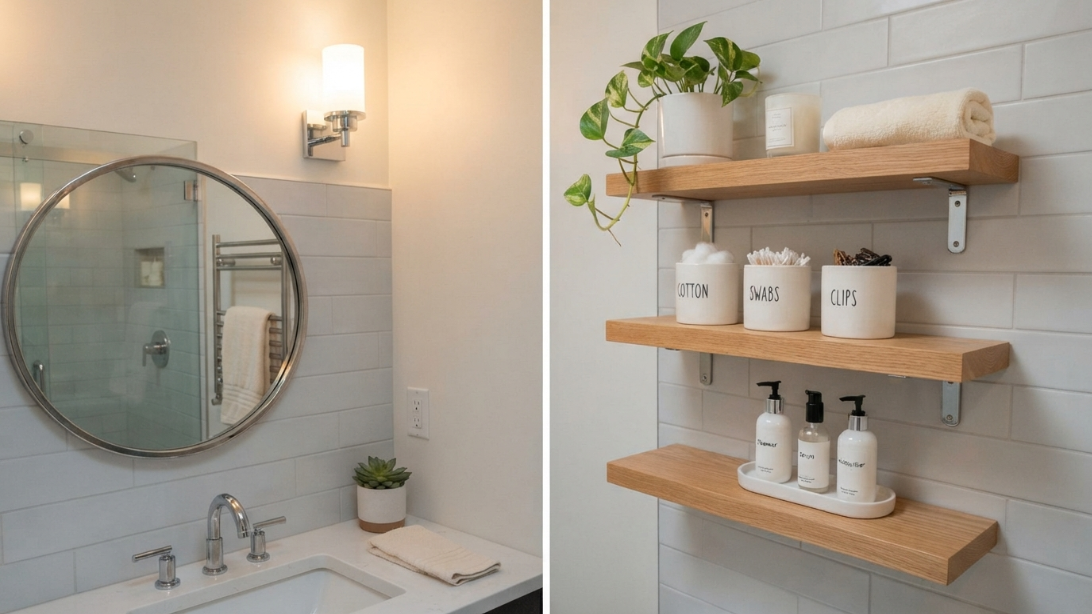
Almost every small bathroom has at least one section of wall space between fixtures that is currently doing nothing. A floating shelf or a small set of floating shelves on that wall adds storage and display space without taking any floor area.
Above the toilet if an etagere is not the right fit, beside the mirror, above the door, or beside the shower are all potential floating shelf locations depending on the specific bathroom layout. Floating shelves in small bathrooms work best when they hold a curated selection of items rather than serving as overflow storage for everything that does not fit elsewhere. A plant, a candle, rolled hand towels, and one small basket of items look much better than a crowded shelf of random products. Floating shelves add storage exactly where it is needed without changing the floor plan at all.
5. Use a Shower Caddy That Maximizes Shower Space
Shower products are some of the most space-consuming bathroom items and they almost always live in the shower itself, which means the shower caddy solution directly affects how functional and how visually calm the shower area feels.
A corner tension pole caddy stretches from floor to ceiling and holds multiple levels of shelving without any drilling or damage. A suction cup caddy with multiple compartments organizes products by type. A teak wood shelf that hooks over the shower door or hangs from the showerhead provides a beautiful and practical surface for daily products. Matching the caddy style to the bathroom aesthetic and keeping only currently-used products in the shower rather than accumulating months of backup products keeps the shower area organized and visually calm.
6. Install Adhesive Hooks Strategically Throughout the Bathroom
Adhesive hooks rated for bathroom humidity are one of the most versatile and most underused storage tools in a small apartment bathroom. They can go on virtually any surface including walls, the backs of doors, the sides of vanities, and cabinet interiors, and they hold a surprising variety of items.
Behind the door for towels and robes. On the wall beside the shower for a loofah and razor holder. On the inside of the cabinet door for the hair dryer. On the wall beside the vanity for a small bag of daily hair accessories. On the back of the toilet for a hand towel. Each hook addresses a specific storage problem at the exact location where that item is used, which eliminates the need to create centralized storage areas in a space that may not have room for them. Strategic hook placement creates storage at the point of use throughout the entire bathroom.
7. Use Stackable Drawers or Small Dressers for Cosmetics and Toiletries
If counter space is limited and cabinet space is already maxed out, a small stackable drawer unit on the counter or under the vanity holds a significant number of small items in organized, accessible drawers without the visual chaos of loose items spread across every available surface.
Clear acrylic stackable drawers are the most popular option because they let you see contents without opening each drawer. They work on countertops for daily cosmetics and skincare. They fit under the sink for backup products and first aid supplies. They stack on shelves to subdivide larger open storage areas. Small slim tower drawer units in white or black sit beside the toilet or beside the vanity and add significant storage capacity in a very small footprint. Stackable drawer storage is one of the most efficient small bathroom storage formats available.
8. Roll Towels Instead of Folding and Store Them in a Basket
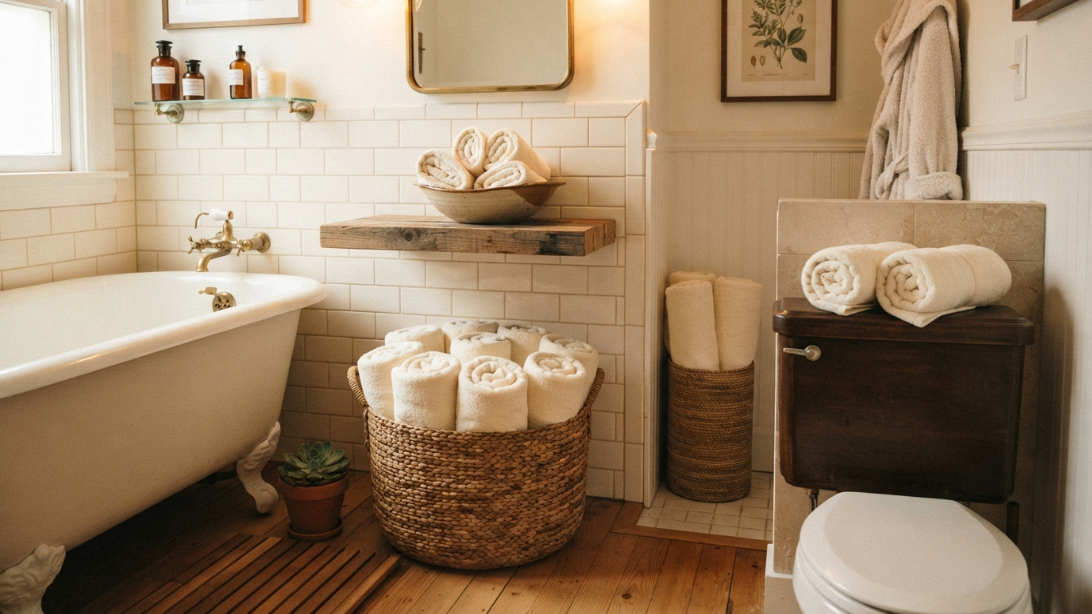
Towel storage in a small apartment bathroom is often an afterthought that results in towels piled on top of each other on a single bar or stacked on a shelf in a way that looks messy within an hour of being organized.
Rolling towels and storing them upright in a basket, a wide-mouth vase, a wooden crate, or a woven bin creates a spa-like storage display that looks intentional and stays organized because each towel is accessible individually without disturbing the others. A basket of rolled towels on a shelf, beside the tub, or on the floor beside the vanity takes up less space than folded towel stacks while looking significantly more attractive. Rolled towel storage solves both the aesthetic and the access problem simultaneously.
9. Use a Medicine Cabinet if One Does Not Already Exist
If the bathroom has a flat mirror above the vanity rather than a medicine cabinet, replacing or supplementing it with a surface-mount or recessed medicine cabinet adds significant hidden storage in a space that is already being used for the mirror function.
Surface-mount medicine cabinets attach to the wall in front of the existing surface and add three to five inches of depth for storage. Recessed medicine cabinets sit inside the wall and add even more depth without projecting into the room at all. Both types are available in sizes that fit standard vanity widths and in finishes that work with most bathroom styles. For renters who cannot install a recessed cabinet, a surface-mount option attached with removable mounting or leaning against the wall above a specific surface is an alternative. Medicine cabinet storage hides a remarkable quantity of small items behind a mirror that the bathroom needs anyway.
10. Add a Slim Rolling Cart Between the Toilet and Wall or Vanity
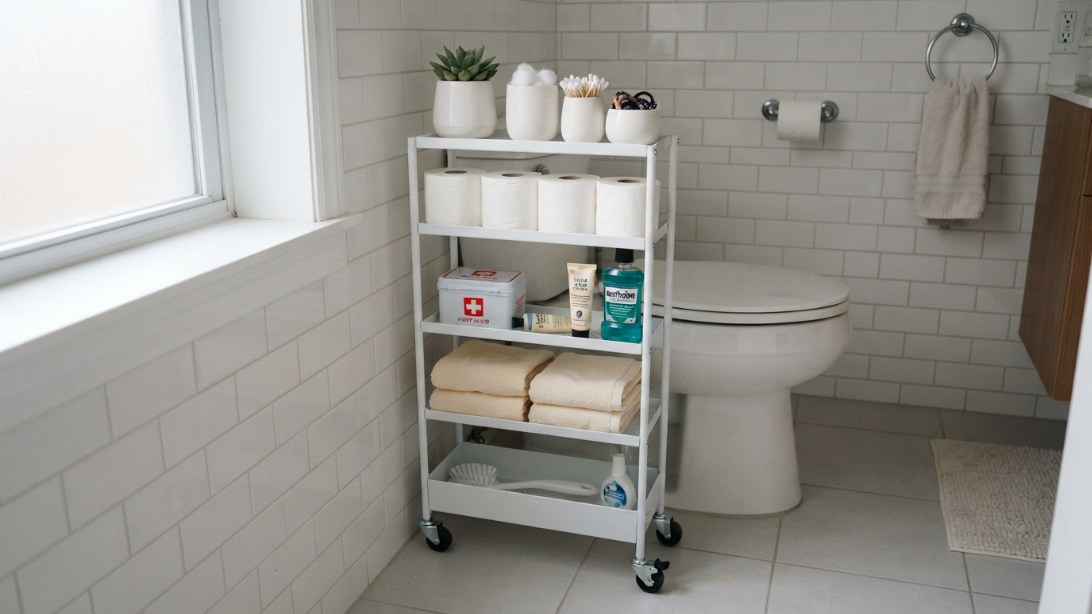
Many small bathrooms have a narrow gap between the toilet and the wall, or between the toilet and the vanity, that is too small for standard furniture but large enough for a slim rolling cart. These carts, often called pull-out pantry carts or bathroom slim carts, are designed specifically for this measurement and slide in and out of the gap for access.
A slim rolling cart in this space can hold toilet paper, hand towels, skincare products, medications, cleaning supplies, and almost any other bathroom category depending on how the shelves are organized. They typically have four to six shelves, come in white, black, or warm wood tones, and cost very little relative to the storage they add. Slim rolling carts solve the gap-beside-the-toilet problem that wastes usable space in most small bathrooms.
11. Use the Back of the Bathroom Door Fully
The back of the bathroom door is a complete wall of usable storage space that most apartments treat as a surface for one towel hook and nothing else. An over-door organizer that hangs from the top of the door without any installation adds multiple pockets or shelves of storage immediately.
Over-door organizers with clear pockets hold individual toiletry items, makeup, medications, and small accessories in visible, individual compartments. Over-door shelf organizers hold larger items like bottles and rolled towels. Over-door hooks hold multiple towels, robes, and bags. Some doors can hold a combination of organizer styles simultaneously by using both the top of the door for a hanging organizer and adhesive hooks lower down for additional items. The back of the bathroom door can hold as much as a small cabinet when used fully.
12. Store Makeup and Small Accessories in Divided Organizers
Makeup, hair accessories, skincare products, and small grooming tools are some of the most space-consuming items in a small bathroom because they come in irregular shapes and sizes that resist standard storage formats.
Divided organizers with sections sized for specific product types, lipsticks, mascaras, foundations, brushes, and hair ties keep small items from mixing together into a chaotic jumble. Clear acrylic makeup organizers on the counter hold daily products in visible, accessible sections. Drawer inserts with adjustable dividers organize a bathroom drawer into specific categories. A small turntable or lazy Susan on the counter holds products in a rotating accessible format that eliminates the back-of-the-counter problem. Divided storage for small items makes a bathroom counter and cabinet significantly easier to maintain.
13. Create Zones for Different Household Members
In a small apartment bathroom shared by more than one person, the absence of clearly defined individual zones creates the constant reorganization problem where one person’s products displace another person’s products and nothing stays in the same place.
Assigning specific shelves, specific baskets, or specific sections of the under-sink cabinet to each person creates clear ownership that makes the shared bathroom significantly easier to maintain. Color-coded baskets where each person has a specific color for their products, labeled shelves with names, or simply a clear spatial division of the available storage makes the shared small bathroom function like two people organized it rather than two people competing for the same space.
14. Use Magnetic Strips for Small Metal Items
A magnetic strip mounted on the inside of a cabinet door or on a small section of wall holds bobby pins, nail scissors, tweezers, nail clippers, and any other small metal grooming tool in a way that makes them immediately visible and immediately accessible rather than lost at the bottom of a drawer or scattered across the counter.
Magnetic strips in bathrooms are the equivalent of the magnetic knife strip in a kitchen. They eliminate the small-items-in-a-drawer problem entirely for any metal item. For non-metal small items, a small adhesive organizer with individual pockets beside the magnetic strip covers the non-magnetic category. Magnetic strip storage solves the lost-small-items problem permanently and inexpensively.
15. Do a Regular Monthly Edit to Prevent Storage Creep
The best storage system in a small apartment bathroom fails over time if the quantity of items it is being asked to hold grows faster than the system can accommodate. Storage creep, the gradual accumulation of products, samples, duplicates, and items past their useful life, is the most consistent reason that well-organized small bathrooms become chaotic again within a few months.
A monthly edit of fifteen minutes where expired products are discarded, duplicates are consolidated, items that do not belong in the bathroom are relocated, and the organization system is reset to its intended state keeps the storage solutions working as designed. Regular editing is the maintenance habit that makes any small bathroom storage system sustainable long-term rather than a one-time organizational achievement that gradually deteriorates.
FAQs
What is the best storage solution for a very small bathroom with no cabinets?
Freestanding solutions work best when there are no built-in cabinets. An over-toilet etagere adds shelving above the toilet. A slim rolling cart fits beside the toilet or vanity. A small freestanding cabinet or tower adds enclosed storage. Adhesive hooks and strips add wall storage without installation. A combination of two or three of these freestanding solutions can replace a significant amount of built-in cabinet storage.
How do I organize a small bathroom that I share with a roommate or partner?
Assign clearly defined individual zones using labeled baskets, dedicated shelves, or color-coded storage. Keep shared items like toilet paper and cleaning supplies in a neutral zone that both people contribute to and maintain. Establish a simple rule about keeping personal items within the assigned zone rather than spreading across shared surfaces. Clear communication about the system matters as much as the physical organization.
What are the best storage products for a small bathroom on a budget?
Over-door organizers from Amazon or IKEA cost under twenty dollars and add significant storage immediately. Command hooks and strips solve multiple storage problems at minimal cost. Dollar store baskets and bins organize existing cabinets without premium prices. Tension rods inside under-sink cabinets create hanging storage for free. The most impactful small bathroom storage improvements rarely require expensive products.
How do I make a small bathroom look organized without hiding everything?
Display only the items that are genuinely attractive, specifically rolled towels, plants, candles, and coordinated bottles. Everything else lives behind a door or inside a container. Keeping displayed items on trays or in matching vessels makes them look intentional rather than cluttered. Limiting the counter to only daily-use items and finding hidden storage for everything else creates the organized appearance without requiring every single item to be invisible.
Conclusion
The best bathroom storage ideas for small apartment spaces come down to using every available surface intelligently rather than accepting that a small bathroom cannot hold what you need. The space above the toilet, behind the door, inside cabinet doors, in wall gaps, and on empty wall sections all represent genuine storage capacity waiting to be used. Start with the space that causes the most daily frustration, apply one or two targeted solutions, and build from there. Which part of your bathroom storage is failing you most right now?