
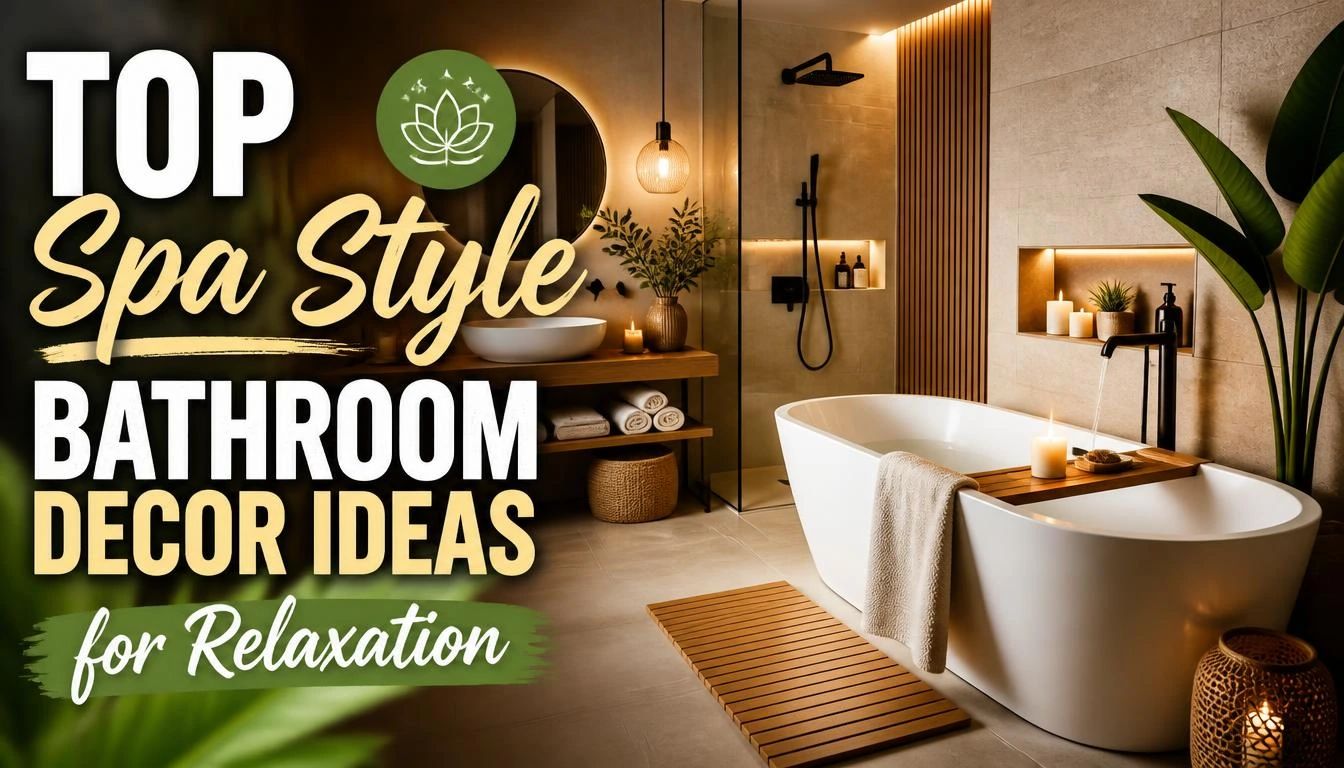
The top spa style bathroom decor ideas for relaxation share a quality that separates them from the generic advice to add a diffuser and some white towels: they address what actually makes a bathroom feel restorative rather than merely clean. I have stayed in genuinely excellent hotel spas and in bathrooms decorated with every spa-adjacent product available at Target, and the difference between them was not the price of the showerhead or the number of candles on the ledge. It was the specific combination of sensory qualities, warm light, natural materials, quiet, softness, and controlled visual simplicity, that the hotel spa delivered deliberately and that the decorated bathroom accidentally missed because nobody thought about it as a sensory system rather than a collection of individual decorating decisions.
What Actually Makes a Bathroom Feel Like a Spa
The spa experience is not primarily visual. Photographs of spa bathrooms look beautiful, but the experience of being in one is primarily sensory in ways that photographs cannot capture: the specific quality of light that feels warm rather than clinical, the sound of water without the echo that hard tile surfaces normally produce, the temperature of the air and surfaces, the scent that registers before anything visual, and the specific quality of softness underfoot and in the hand that good spa textiles provide.
Sensory coherence is the quality that genuine spa environments achieve and that most decorated bathrooms miss: every sensory input is managed toward the same experiential outcome of calm and restoration. The lighting is warm and indirect. The materials are soft and natural. The scent is present but not aggressive. The acoustic environment is softened rather than echoing. The visual field is simplified rather than decorated. When all of these inputs move in the same direction simultaneously, the room produces a physiological relaxation response that no single element could achieve independently.
Visual simplicity specifically deserves emphasis because it is the quality most consistently sacrificed in bathroom decorating in favor of visual interest and personality. A genuinely spa-like bathroom has fewer visible objects than most people’s instinct suggests is appropriate, because the brain in a visually complex environment maintains a low-level processing state that is incompatible with the genuine rest that spa environments provide. Clearing surfaces, concealing storage, and resisting the impulse to fill every available space produces the visual quietness that allows the other sensory qualities of warmth, softness, and scent to register fully.
1. Transform the Lighting Before Anything Else
Lighting in a bathroom determines whether the room feels clinical or restorative more than any other single element, and most bathrooms default to the clinical option through overhead fixtures designed for functionality rather than atmosphere.
The specific problem with standard bathroom lighting is its position above the mirror and its color temperature in the standard white to cool white range that provides excellent visibility for grooming but produces the same quality of light as a doctor’s office. This light is useful and genuinely necessary for its intended purpose, but it actively prevents the relaxation response because the brain associates overhead white light with alertness and activity rather than rest.
The solution is layered lighting that provides functional light when needed and atmospheric light when the bathroom is being used for restoration rather than grooming. Dimmable overhead fixtures with a dimmer switch installed on the existing circuit at $15 to $30 in hardware allow the overhead light to serve both functions depending on its setting. Sconce lighting beside the mirror rather than above it reduces the shadow-producing overhead angle and provides a warmer, more flattering light quality for both grooming and atmosphere.
Bulb selection matters significantly: switching existing fixtures to bulbs at 2200K to 2700K produces an amber-warm tone that reads as genuinely spa-like rather than the blue-white quality of standard bathroom bulbs at 3000K to 4000K. Philips Hue Smart Bulbs at $15 to $25 each allow color temperature adjustment without any fixture change, which is the most flexible solution for bathrooms where fixture replacement is not possible.
Candles provide the specific quality of moving, amber light that no electric source fully replicates and that produces the most reliably spa-like atmosphere of any lighting addition. A grouping of three to five candles on the bathtub ledge, the vanity counter, or a dedicated candle tray beside the tub produces the specific warmth and flicker quality that transforms a bathroom into a restorative space. Flameless LED candles from Luminara at $30 to $60 each provide the flicker effect safely for bathrooms where open flames near water feel risky.
2. Invest in Genuinely Good Towels
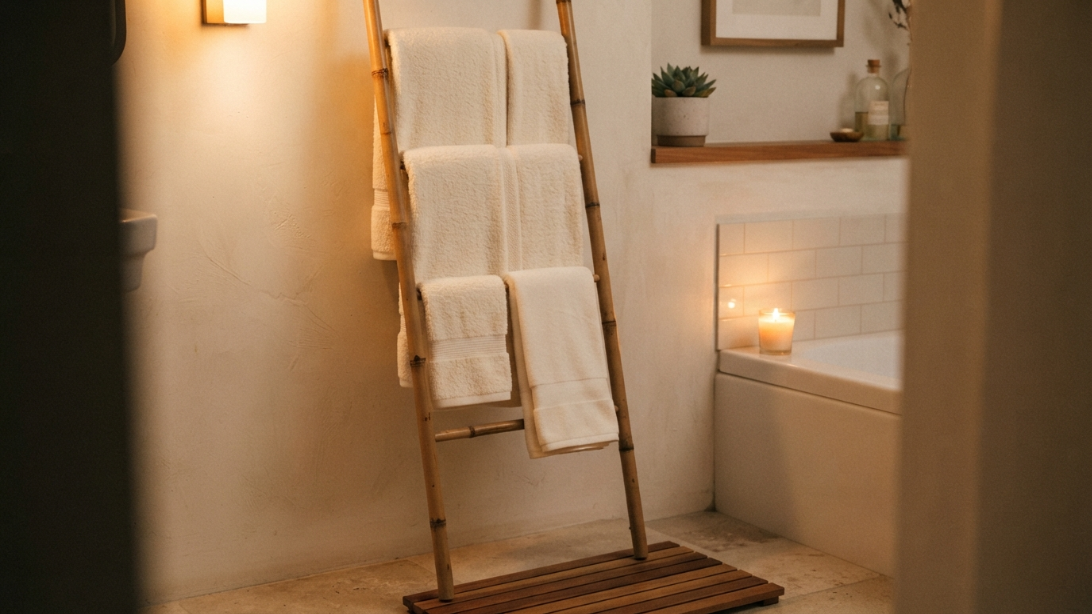
Towels in a spa-style bathroom are not decorative accessories. They are the primary textile contact point of the bath experience, and their quality determines the sensory quality of the experience more directly than any visual element in the room.
The specific qualities that make a towel feel spa-like are weight, absorbency, and softness, and these qualities correlate imperfectly with price, which means some expensive towels disappoint and some mid-range options genuinely satisfy. Turkish cotton towels specifically provide the combination of long staple fibers that become softer with washing, quick-dry properties that prevent the musty smell that lower-quality towels develop, and a weight that feels substantial without being stiff. Brooklinen, Parachute, and Wirecutter’s recommended Frontgate Resort Cotton Towels at $30 to $80 per bath towel provide genuinely excellent quality. IKEA’s NJUTJA and Target’s Threshold Performance lines at $8 to $20 per towel provide significantly better quality than their price suggests.
Color selection for spa-style bathroom towels follows the same principle as color selection throughout the room: warm white, ivory, stone, and warm gray all provide the clean but not cold quality that genuine spa environments use. A single color across all towel sizes provides visual calm that a mixed color towel display cannot, and the specific choice of a warm white rather than a bright white reduces the clinical quality that brilliant white towels share with medical environments.
Towel display in a spa bathroom should be deliberate and restrained: three bath towels and two hand towels displayed on a simple towel bar or ladder, folded to the same width and hung at consistent spacing, looks more spa-like than a full collection of towels in multiple colors displayed on multiple surfaces. A freestanding towel ladder in natural bamboo at $30 to $60 from Amazon or Target provides the display infrastructure that suits spa-style bathrooms better than standard towel bars through its slightly organic, less architecturally rigid character.
Top Spa Style Bathroom Decor Ideas for Relaxation Through Natural Materials
Natural materials in a spa bathroom provide a connection to the organic world that manufactured and synthetic alternatives cannot replicate, and this connection is not merely aesthetic. The presence of natural materials, specifically wood, stone, bamboo, and plant life, produces a measurable reduction in stress biomarkers in environments where manufactured alternatives do not, through a mechanism that researchers call biophilic response.
Wood Elements That Add Warmth
Wood in a bathroom requires specific selection for moisture resistance, because standard wood species deteriorate quickly in the humidity cycles that bathroom use creates, but the right wood choices provide the organic warmth that makes a bathroom feel spa-like rather than tiled and clinical.
Teak and bamboo are the two wood categories with sufficient natural moisture resistance for genuine bathroom use. Teak bath mats provide the specific sensory experience of stepping from a shower onto a warm, slightly yielding wood surface that is so qualitatively different from a standard bath mat that it changes the sensory character of the shower experience. Teak bath mats from TeakCraft, Bare Decor, and Amazon at $40 to $120 provide genuine teak quality at various size points. The mat requires occasional light sanding and oiling to maintain its appearance and water resistance, which is a five-minute maintenance task every few months rather than a significant commitment.
Bamboo accessories including a soap dispenser, toothbrush holder, cotton swab holder, and small tray replace the plastic or chrome alternatives that most bathrooms default to with natural material equivalents that read as spa-like through their organic color and texture. A coordinated set of bamboo accessories from Amazon or H&M Home at $20 to $60 total replaces the visual clutter of mismatched plastic bathroom accessories with a cohesive natural material presence that immediately shifts the bathroom’s atmosphere.
Stone and Concrete for Grounded Calm
Stone and concrete surfaces and accessories provide a visual and tactile weight that lighter materials cannot, and this groundedness is part of what makes spa environments feel both calming and substantial rather than light and slightly insubstantial.
A concrete or stone soap dish and toothbrush tray add material weight to the vanity counter without the visual complexity of decorative objects. Handmade concrete accessories from Etsy artisans at $15 to $40 per piece provide genuine concrete quality with the slight variation and imperfection of handmade objects. River stones in a shallow bowl provide a completely free natural material addition that adds organic texture and visual grounding to a bathroom shelf or counter.
Stone diffuser bases and oil burners in marble, soapstone, or alabaster provide the dual function of scent delivery and material beauty at $20 to $60 from Urban Outfitters, Anthropologie, and specialty wellness retailers. The weight and coolness of stone in the hand when handling these objects adds to the sensory quality of the spa bathroom experience in ways that plastic and ceramic alternatives do not.
3. Control Scent as a Primary Atmospheric Layer
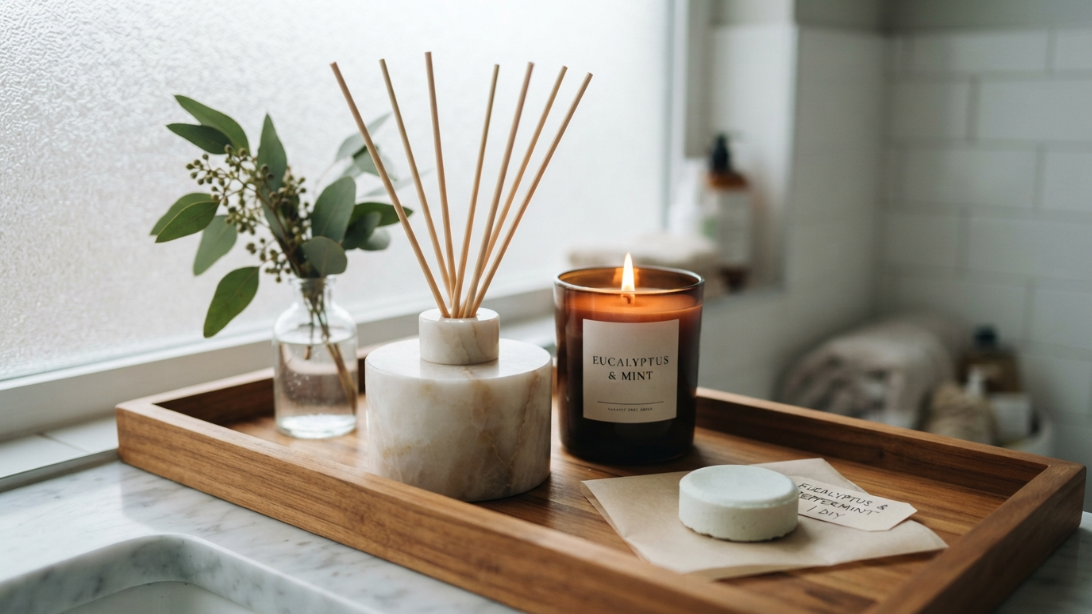
Scent reaches the limbic system, the brain region responsible for emotion and memory, faster than any other sensory input, which means the scent environment of a bathroom registers and affects mood before the room’s visual qualities are consciously processed. A bathroom that smells actively restorative produces a relaxation response before the person in it has consciously evaluated any other aspect of the environment.
Spa scent profiles that reliably produce relaxation responses in clinical settings include:
- Eucalyptus and mint: cooling, clarifying, associated with respiratory ease and alertness-to-calm transition
- Lavender and chamomile: deeply sedative, most studied for relaxation induction, appropriate for evening baths
- Cedarwood and sandalwood: woody, grounding, warm, associated with meditation and contemplation
- Bergamot and citrus: mood-elevating without stimulating, appropriate for morning use
- Rose and jasmine: floral, complex, associated with luxury and sensory pleasure
Delivery mechanism selection determines how consistently the scent experience is delivered and how much control you have over its intensity. Reed diffusers provide continuous background scent without requiring active management and are appropriate for small bathrooms where a low level of consistent scent is more pleasant than periodic intense scent from a candle. Essential oil diffusers provide adjustable intensity and the ability to change scent profiles seasonally or by use occasion. Shower steamers dissolve on the shower floor and release essential oil vapor with the steam, providing an intense but brief scent experience specifically during the shower that is the most directly spa-like delivery format available.
DIY shower steamers provide this experience at $0.50 to $1 per use compared to $2 to $4 for commercial versions: combine one cup of baking soda, a quarter cup of citric acid, and twenty to thirty drops of eucalyptus and peppermint essential oil, press into a silicone mold, and allow to cure for twenty-four hours. Place one on the shower floor away from direct water stream and allow the steam to activate it during the shower.
4. Add Plants for Living Atmosphere
Plants in a bathroom produce the biophilic response that natural materials approach but that living organisms deliver more completely, because a living plant connects the bathroom environment to the natural world in a way that stone and wood, beautiful as they are, cannot.
Bathroom-appropriate plant species must tolerate the specific combination of high humidity, temperature fluctuation, and variable light that bathrooms provide. Pothos tolerates low light and high humidity with minimal care and provides trailing organic texture that suits spa aesthetics through its visual softness. Peace lilies thrive in low light and high humidity while producing white flowers that add delicate color. Boston ferns provide the lush, dense greenery most associated with spa environments but require higher humidity and some indirect light to maintain their appearance. Orchids produce the specific elegant floral quality of luxury spa environments and require only indirect light and once-weekly watering when properly established.
Plant display in a spa bathroom should be deliberate rather than accumulated: one large plant in a quality ceramic or concrete pot provides more visual impact and a stronger biophilic response than several small plants distributed across multiple surfaces. A large pothos in a hanging planter near the window, a peace lily on the floor beside the tub, or a Boston fern on a plant stand beside the shower each constitute a single deliberate plant statement that reads as spa-like rather than greenhouse.
Plant vessel selection matters as much as the plant itself for spa aesthetics: handmade ceramic pots in muted earth tones, concrete planters with a matte finish, and simple white or stone-colored pots all suit spa bathroom aesthetics better than the brightly colored or heavily patterned plastic pots that plants are often sold in. Repotting a bathroom plant into an appropriate vessel is a fifteen-minute task that significantly improves its visual contribution.
5. Upgrade the Shower Experience Specifically
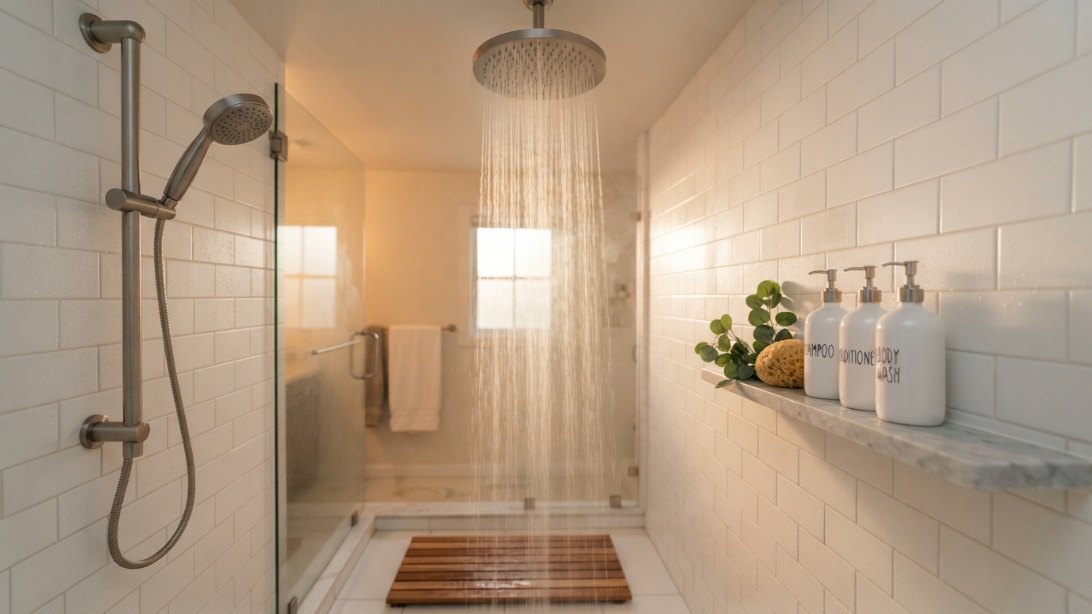
The shower is the bathroom element with the most direct and consistent impact on the daily experience of the space, and improving its sensory quality produces a daily return on investment that visual decorating changes cannot match in terms of frequency of use and immediacy of experience.
A quality showerhead is the single functional upgrade with the most direct impact on how restorative the shower experience feels. A rainfall showerhead that delivers water from directly above at a wide, gentle spread produces the specific quality of rain-like immersion that spa showers provide and that standard showerheads cannot replicate. Kohler, Moen, and Delta all produce ceiling-mount and wall-mount rainfall showerheads at $80 to $250 that install on standard shower arm connections without requiring plumbing modification in most cases.
A handheld showerhead in addition to or instead of a fixed head provides the flexibility of directing water precisely that spa showers use for targeted muscle relief. Kohler’s Prone and Moen’s Magnetix at $40 to $120 provide genuinely good quality handheld showers with magnetic docking that suits spa aesthetics better than the standard hose-and-hook mounting of cheaper alternatives.
Shower niches or waterproof shelving that eliminates the plastic shampoo caddy hanging from the showerhead are the organizational upgrade that most directly shifts a shower from functionally adequate to spa-like. A teak shower shelf leaning against the shower wall at $30 to $60, or a simple marble or stone shelf mounted at shoulder height for $20 to $40 in materials, replaces the visual chaos of bottles in various states of use with a composed and calm shower interior that reads as genuinely considered.
6. Simplify and Edit the Visual Field
The visual editing of a spa-style bathroom, removing objects that contribute to visual complexity without contributing to the sensory experience of restoration, produces more genuine spa character than adding objects, and it costs nothing beyond the decision to do it.
Counter surfaces are the primary accumulation zone for the objects that undermine spa atmosphere: the collection of skincare products in various packaging, the charger left plugged in beside the sink, the hair tools in various states of stowage, and the miscellaneous objects that migrate to flat surfaces throughout the house and find their way to the bathroom counter without anyone deciding they belong there.
Concealed storage solutions that move counter objects behind doors or into drawers are the most effective tool for maintaining the visual simplicity that spa atmosphere requires. Acrylic drawer organizers at $10 to $30 per set from The Container Store and Amazon organize vanity drawers to accommodate everything currently on the counter without requiring additional furniture. A small cabinet or floating shelf with a door, specifically a rattan-fronted cabinet or a mirror cabinet that conceals storage behind a reflective surface, provides additional concealed storage at $50 to $200 that maintains the visual calm of clear counter surfaces.
A tray on the counter containing only the objects that genuinely need to be accessible, a soap dispenser, a single perfume bottle, and one hand lotion, corrals the necessary counter presence into a defined area that reads as intentional rather than accumulated. The tray’s material and quality matters: a marble tray, wood tray, or concrete tray at $20 to $50 provides the material quality that suits spa aesthetics while performing the practical function of containing and organizing the counter’s essential objects.
7. Use Color and Texture for Calm Rather Than Interest
Color in a spa bathroom should be selected for its psychological effect on the room’s atmosphere rather than for its visual interest as a design element, and the specific colors that produce calming effects in bathroom environments are consistent enough across research and anecdotal experience to provide clear guidance.
The spa color palette concentrates in three zones: cool neutrals including warm white, stone, pale sage, and soft gray that provide visual quiet; warm earth tones including terracotta, warm sand, and camel that provide grounded warmth without visual energy; and nature-derived colors including muted green, soft blue, and warm taupe that provide the specific quality of natural environment reference that the biophilic response responds to.
Avoiding high contrast in a spa bathroom color scheme is as important as selecting appropriate individual colors, because high contrast between surfaces keeps the eye moving and the brain processing rather than allowing the settling and rest that spa environments require. A bathroom where the walls, floor, and fixtures are all within a similar tonal range, even if they vary in color and material, reads as calmer than one where dark cabinets contrast sharply with white walls and a black floor.
Texture within a cohesive color palette provides the visual interest that prevents a calm color scheme from reading as boring without introducing the visual energy that strong color contrast creates. A warm white wall with a white subway tile shower surround and white cotton towels reads as calmer than the same combination in three different colors, and the variation in surface texture between the painted wall, the glossy tile, and the woven towel provides sufficient visual interest without requiring color contrast.
8. Create a Dedicated Bath Experience
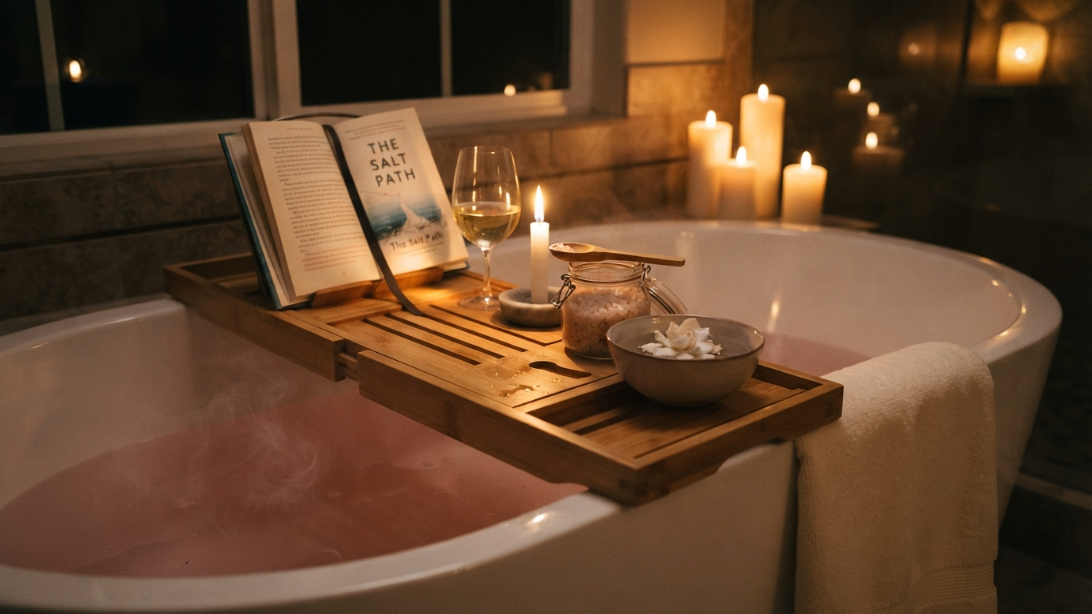
The bathtub, if one exists in the space, represents the highest-potential restorative element in any bathroom, and creating a deliberate ritual environment around it elevates the bath from a hygiene activity to a genuinely restorative experience that the room’s decor should support and facilitate.
A bathtub caddy or tray that bridges the tub provides the surface infrastructure for a bath ritual: a place for a book, a glass of wine, a candle, bath salts, and any other elements of a deliberate bath experience. Bamboo bathtub caddies with adjustable width, a book stand, and tablet holder slots at $30 to $80 from Amazon and Wayfair provide this function with appropriate natural material character. A solid wood board cut to fit the tub width and lightly oiled for water resistance provides the same function at lower cost with a more refined, less overtly “spa product” aesthetic.
Bath additives including epsom salts, bath oils, and bath soaks displayed in apothecary jars on a shelf or tray beside the tub provide both the visual element of spa preparation and the genuine functional benefit of mineral salts and skin-conditioning oils. Dr. Teal’s Epsom Salts at $5 to $8 per bag provide the mineral soak benefit at extremely accessible cost. Decanting them into a clear apothecary jar before display elevates their visual contribution from pharmacy product to spa amenity without changing their functional quality.
The ten minutes before the bath that a genuinely restorative spa experience uses to transition from daily life to the restorative state, dimming the lights, lighting candles, starting a diffuser, and filling the tub with appropriate water temperature and additives while the bathroom scent develops, are the ritual elements that transform a bath from a cleaning activity to a restorative one. The room’s decor should make these ten minutes easy: candles accessible on the tub ledge, bath additives visible and reachable, dimmer switch at the door, and the visual clarity of a simplified room that signals rest before the bath begins.
FAQs
What are the most impactful top spa style bathroom decor ideas for relaxation on a budget under $100?
Replace existing bulbs with warm 2200K to 2700K alternatives and add a dimmer switch to the overhead fixture for $20 to $30 total. Buy two to four quality Turkish cotton towels in warm white and display them on a simple towel ladder for $40 to $60. Add a reed diffuser in eucalyptus or lavender for $15 to $20. Clear all counter surfaces except a tray with one soap dispenser and one lotion. These four changes address lighting, textiles, scent, and visual simplicity simultaneously for under $100 total and produce the highest combined impact of any budget spa bathroom transformation.
What plants work best in a bathroom with no natural light?
Pothos, cast iron plants, and ZZ plants all tolerate very low light conditions that windowless bathrooms provide. Pothos specifically is the most resilient low-light bathroom plant available and provides trailing organic texture with virtually no care beyond occasional watering. Peace lilies tolerate low light but prefer some indirect light for flowering. All four of these plants benefit from occasional placement near a natural light source, even briefly, to maintain their health in truly windowless conditions.
How do I create a spa atmosphere in a bathroom that I cannot renovate?
Focus entirely on the sensory layers that require no structural change: lighting through bulb replacement and candles, scent through a diffuser or shower steamers, textiles through quality towels and a bath mat, visual simplicity through surface clearing and concealed storage, and plant life through one well-chosen and well-displayed plant. These changes require no permission, no tools beyond a light bulb change, and no permanent alteration to any surface, and they collectively address every sensory dimension of spa atmosphere without renovation.
Is it worth replacing a showerhead specifically for spa atmosphere?
Yes, and it is one of the few functional upgrades that produces a daily sensory return that visual decorating changes cannot match. A rainfall showerhead at $80 to $150 changes the quality of the shower experience every single day, which amortizes the cost to pennies per use within months. The installation requires only an adjustable wrench and fifteen minutes in most cases, making it the highest-return functional upgrade available in a spa bathroom project for most budgets.
What scent is most universally associated with spa environments?
Eucalyptus is the scent most consistently and cross-culturally associated with spa environments, specifically the combination of eucalyptus and spearmint or peppermint that characterizes many professional spa facilities. Lavender is a close second for evening and restorative use specifically. Cedarwood and sandalwood provide the most grounding and meditative quality. Using eucalyptus as the primary bathroom scent and rotating secondary notes seasonally provides the spa association while preventing olfactory habituation to a single scent.
Conclusion
A spa-style bathroom is not a collection of spa-branded products arranged on a bathroom counter. It is a sensory environment designed deliberately around the experience of relaxation, and creating it requires understanding which specific sensory qualities produce that experience and then addressing them systematically rather than decorating toward a visual aesthetic and hoping the feeling follows. Start with the lighting, upgrade the towels, manage the scent, clear the surfaces, and add one living plant. The room will tell you what it still needs from there. What is the first change you are making this weekend?