
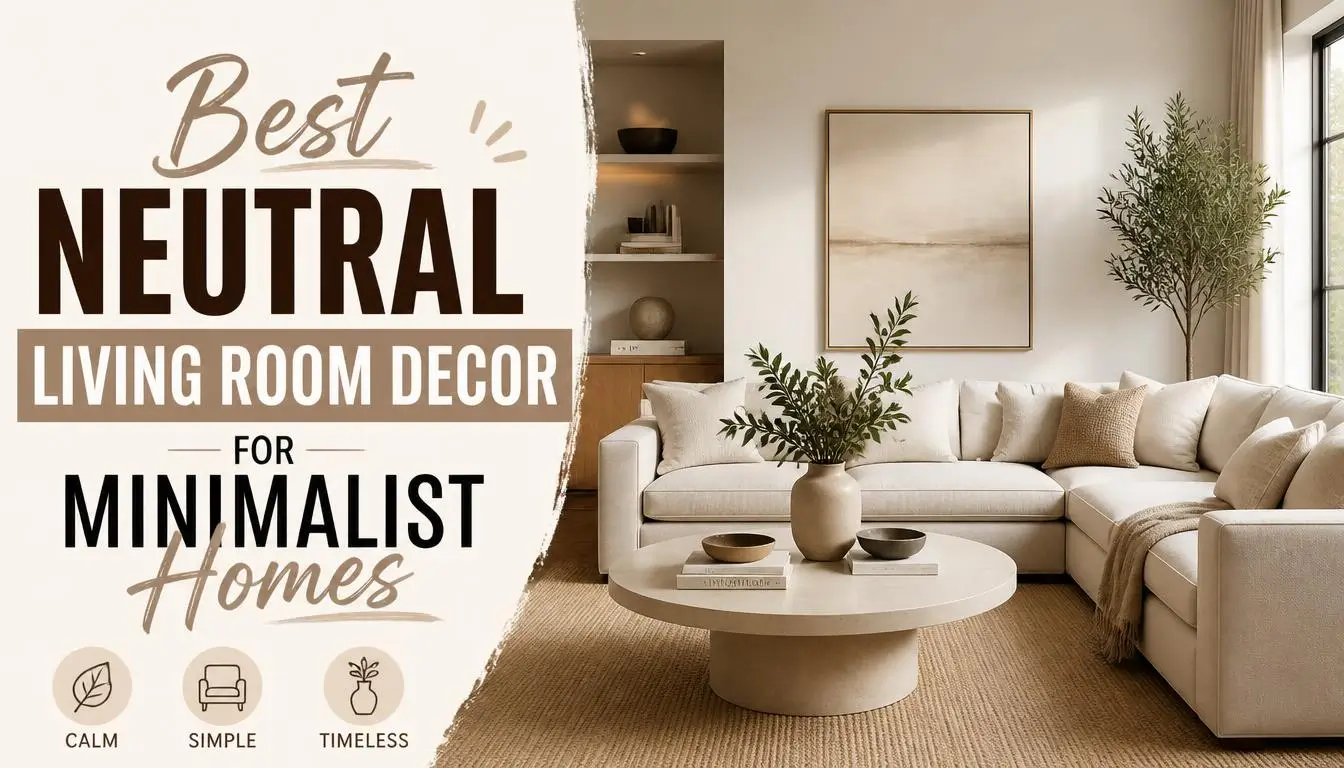
The best neutral living room decor ideas for minimalist homes are not about making a room look empty, cold, or painfully expensive. They’re about creating a space that feels calm the second you walk into it. A good neutral room has softness, texture, balance, and just enough personality to keep it from feeling like a furniture catalog. Minimalist doesn’t mean boring. It just means every piece has to earn its place.
Why Neutral Minimalist Living Rooms Work So Well
Neutral spaces calm the eye fast. That matters in a living room, especially if the rest of life already feels loud, rushed, and slightly chaotic. When you strip back the visual noise, the room starts to feel bigger, lighter, and easier to live in.
The mistake people make is assuming neutral means plain white everything. It doesn’t. A strong neutral minimalist room usually mixes warm whites, oatmeal, taupe, stone, sand, wood tones, and a few darker anchors. The contrast is what keeps the room interesting.
1. Start With Warm Whites, Not Stark Whites
Bright stark white can work, but in a minimalist living room it often feels flat or a little clinical. Warm whites feel softer and more inviting, especially in apartments or homes that don’t get perfect natural light all day.
Paint colors like Swiss Coffee, White Dove, or Alabaster tend to work better than icy whites. They bounce light around without making the room feel sterile. If your walls, ceiling, and trim stay in the same warm family, the room instantly feels more seamless and restful.
2. Layer Different Neutral Shades Together
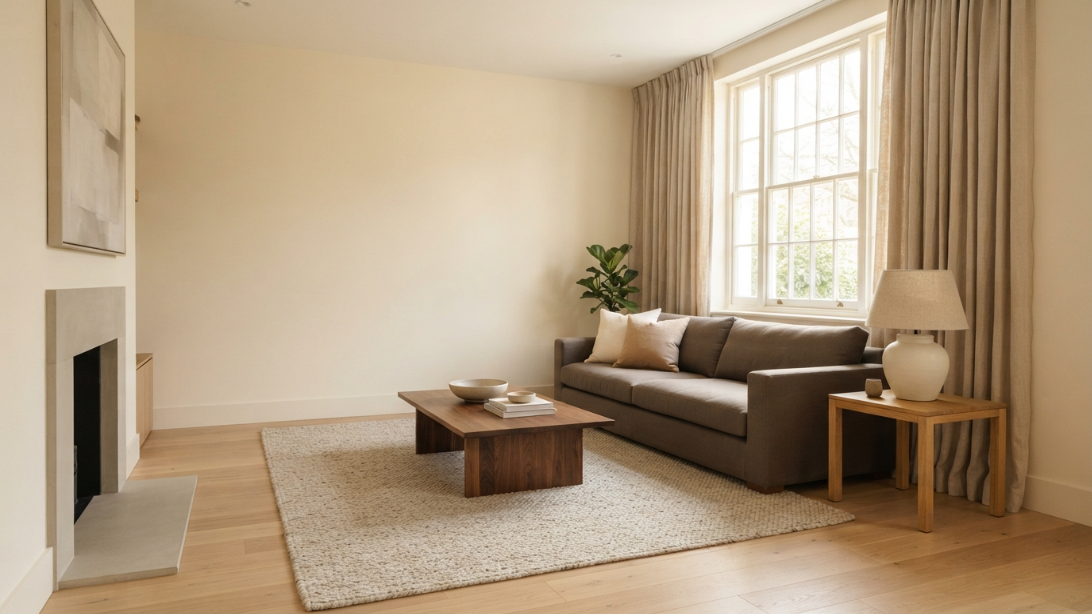
A minimalist neutral room looks expensive when it has depth. The easiest way to create that depth is by layering multiple shades instead of relying on one single beige or one single white.
Try cream walls with a taupe sofa, oatmeal curtains, a stone-colored rug, and walnut or oak accents. That kind of layering keeps the room soft without making it disappear into itself. Variation inside the same palette is what gives a minimalist room that collected, intentional look.
3. Choose Furniture With Clean, Simple Shapes
In minimalist homes, furniture shape matters as much as color. Bulky rolled arms, oversized tufting, and heavy decorative legs can make even a neutral room feel visually crowded.
Go for sofas with straight or gently rounded lines, low-profile coffee tables, and chairs with open frames or visible legs. Think simple, not severe. Brands like West Elm, Article, CB2, and even IKEA have some strong pieces if you know what you’re looking for. Shape does a lot of work in a room with fewer visual distractions.
4. Use Texture to Replace Visual Clutter
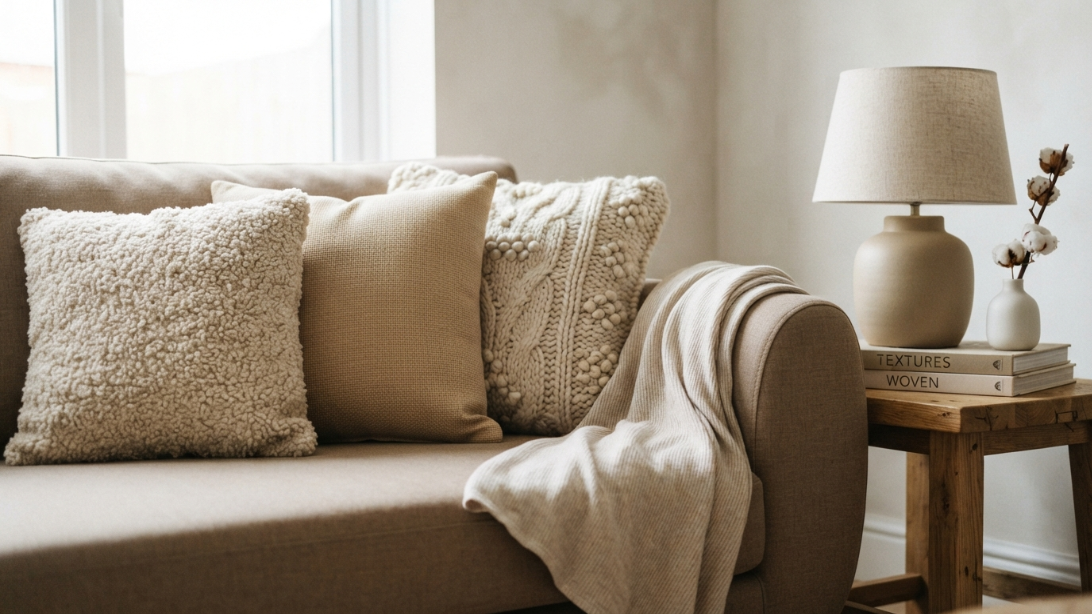
If color is quiet, texture has to speak up. This is what keeps neutral minimalist rooms from looking flat or unfinished. Texture adds warmth without adding chaos.
Linen curtains, boucle pillows, a wool rug, ceramic lamps, raw wood, and matte black metal all help. The room can stay very restrained in color and still feel layered because your eye picks up the material changes. Texture is basically the secret weapon of every good neutral room.
5. Keep the Rug Large and Simple
A rug that’s too small makes a minimalist room feel awkward fast. It breaks the layout apart and makes every furniture piece feel disconnected. If you’re keeping things neutral, the rug needs to ground the room properly.
Choose something large enough that at least the front legs of the main furniture pieces sit on it. Stick to subtle patterns, low contrast, or soft tonal variation. Jute, wool, and flatweave rugs all work well here. The scale of the rug matters more than having a trendy design.
6. Add Wood Tones for Warmth
Minimalist neutral rooms need something organic, otherwise they start to feel a little like a dentist’s waiting room. Wood fixes that fast. It adds warmth, softness, and a lived-in feel without fighting the color palette.
You do not need matching wood everywhere either. A medium oak coffee table, a walnut frame, and a lighter side table can work together if the shapes stay simple. The trick is balance, not perfect coordination. Wood makes neutral rooms feel human.
7. Use Black Sparingly as an Anchor
A room made entirely of pale tones can sometimes feel too floaty. A small amount of black or deep charcoal gives the eye somewhere to land and makes everything else feel more intentional.
That could be a slim floor lamp, picture frames, a candle holder, cabinet hardware, or the base of a coffee table. You do not need much. In fact, too much defeats the softness you’re trying to create. A little contrast goes a long way in minimalist spaces.
8. Keep Wall Art Simple and Intentional
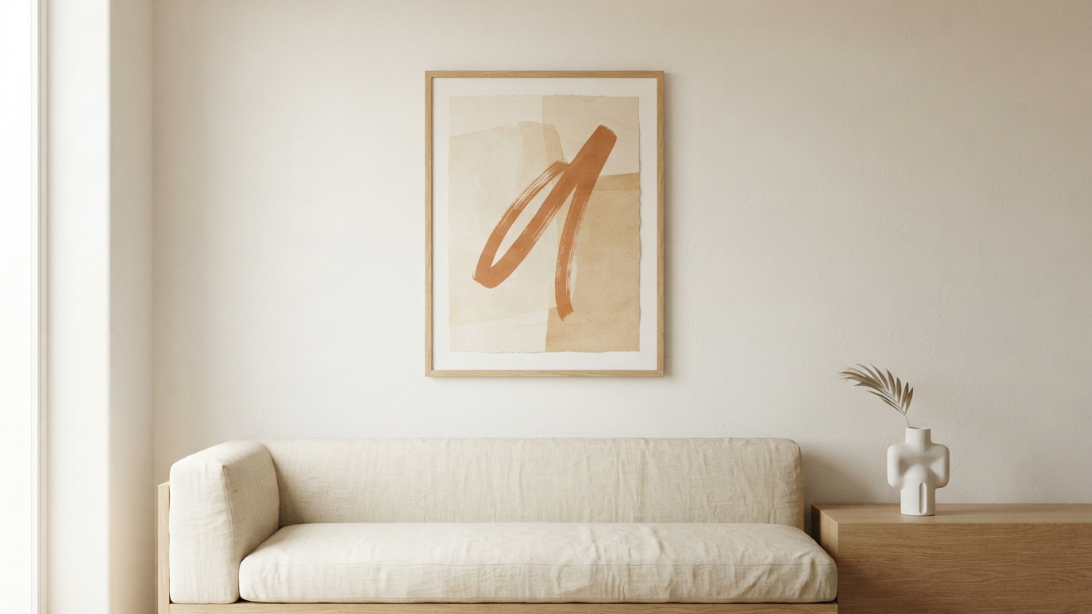
Wall art in a neutral minimalist living room should feel like part of the room, not like it was panic-bought five minutes before guests arrived. One larger piece often works better than a busy gallery wall.
Abstract line art, muted landscapes, black-and-white photography, or textured canvas pieces all work beautifully. The frame matters too. Thin wood, black, or off-white frames usually blend best. Restraint makes the art feel stronger, not weaker.
9. Let Natural Light Do More of the Work
Minimalist neutral decor looks best when the room feels open and breathable, and natural light is a huge part of that. Heavy curtains, dark blinds, or cluttered window areas fight against the whole effect.
Use light linen or cotton drapes, woven shades, or simple Roman blinds in soft tones. Keep the space around windows as open as possible. Mirrors can help too, especially opposite a window. Good light makes every neutral in the room look richer and more layered.
10. Style Surfaces With Fewer, Better Objects
Coffee tables, consoles, and shelves in minimalist homes should not look packed. A few carefully chosen objects almost always feel better than ten smaller things competing for attention.
A stack of two books, one ceramic bowl, and a sculptural candle holder is enough. A console might need a lamp, one vase, and one tray. Stop before it feels finished, then step back. You probably already have enough. Editing is more important than shopping here.
11. Use Storage That Disappears Into the Room
Minimalism falls apart quickly when daily clutter has nowhere to go. Remote controls, blankets, chargers, mail, kids’ toys, and random life stuff need hiding spots or the room never really feels calm.
Look for closed storage in tones that blend into the palette. A media console with doors, a storage ottoman, or a low cabinet in oak, cream, or soft gray works well. Good storage lets the room stay minimal in real life, not just in photos.
12. Add One Soft Statement Piece
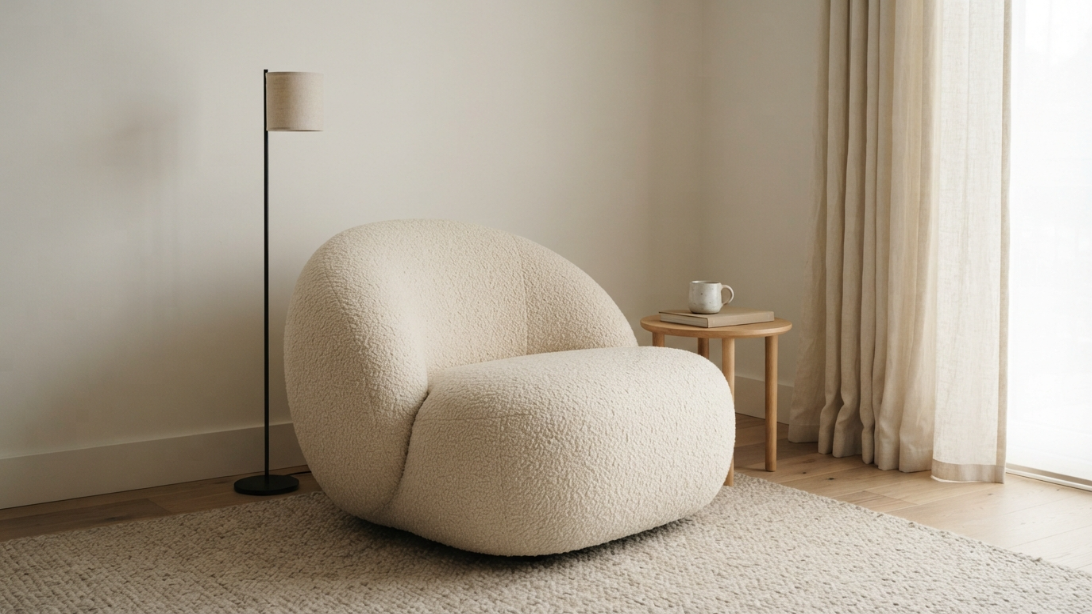
Even the most neutral minimalist room needs one thing with a little extra presence. Not drama, just presence. Otherwise the room can feel so polite it becomes forgettable.
That could be a sculptural chair, an oversized paper lantern, a large textured vase, or a striking travertine coffee table. One piece with shape or personality gives the whole room identity. The goal is still calm, just not generic. Character matters, even in minimal spaces.
Common Mistakes to Avoid
A few things tend to make neutral minimalist living rooms fall flat:
- Using only one shade throughout the whole room
- Buying furniture that’s too big and heavy
- Skipping texture entirely
- Choosing lots of tiny decor instead of a few stronger pieces
- Making everything match too perfectly
- Forgetting practical storage
Minimalist rooms still need warmth, function, and rhythm. If it feels cold, it’s usually because the room has been simplified without being layered.
FAQs
What colors count as neutral in a minimalist living room?
Neutral doesn’t just mean beige. Warm white, cream, taupe, greige, sand, camel, mushroom, soft gray, and natural wood tones all count. The best rooms usually mix several of these together instead of sticking to only one.
How do I make a neutral living room feel cozy?
Add texture first. Try linen curtains, a wool rug, boucle or knit pillows, warm wood, layered lighting, and soft throws. A cozy neutral room depends more on materials and lighting than on color alone.
Can minimalist living rooms still have decor?
Absolutely. They just need less of it. Choose a fewmeaningful or visually strong pieces instead of lots of filler. One large art piece, a sculptural lamp, and a ceramic vase will usually do more than a dozen small accents.
What sofa color works best in a neutral minimalist home?
Cream, taupe, oatmeal, warm gray, and soft brown all work really well. The best choice depends on your wall color, floor tone, and how much natural light the room gets. If you want the room to feel easy to maintain, a medium warm neutral usually hides life better than bright ivory.
Conclusion
The best neutral living room decor ideas for minimalist homes come down to warmth, texture, proportion, and knowing when to stop. You do not need a perfectly styled designer room. You just need a space that feels calm, useful, and good to be in at the end of the day. Which part of your living room feels most off right now, the color, the furniture, or the clutter?